Non-Invasive Neuromodulation For Cognitive Recovery
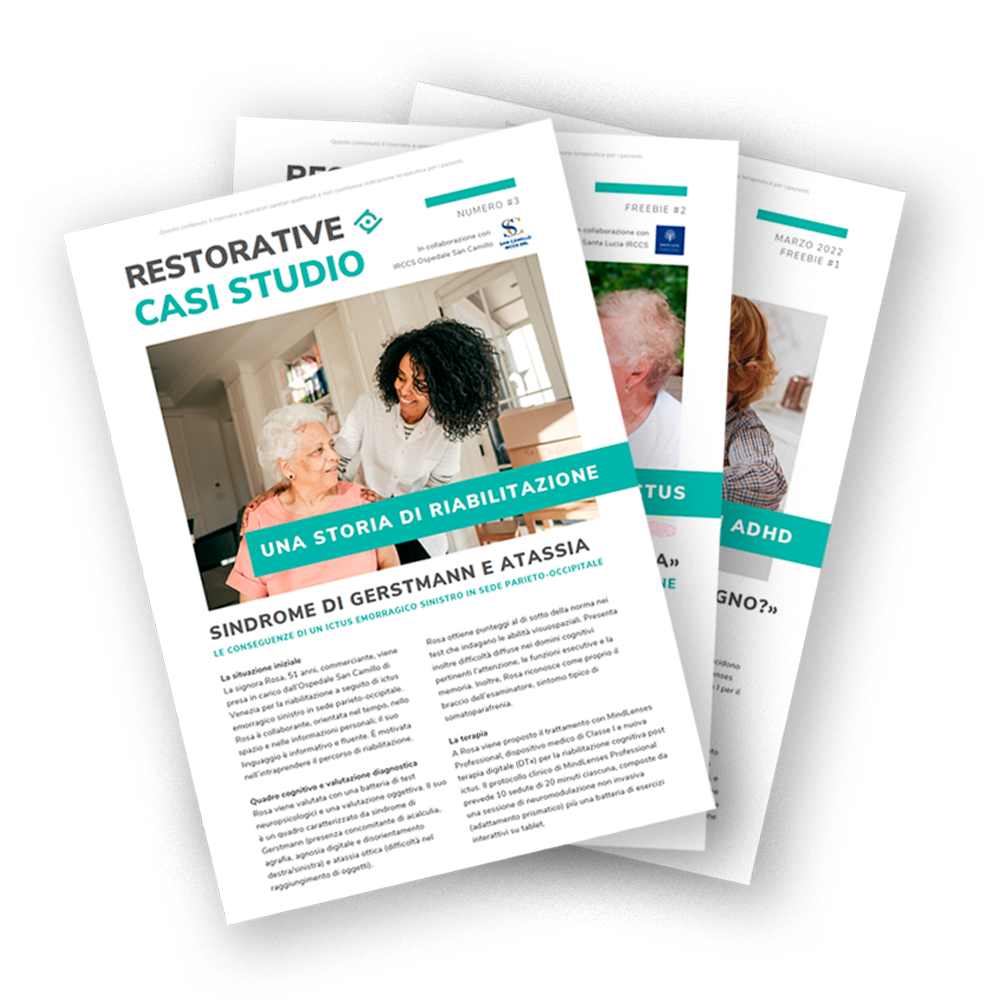
The technology behind our cognitive rehabilitation products is based on a non-invasive neuromodulation technique called prismatic adaptation, the object of the studies of Professor Massimiliano Oliveri and other research groups.
Prismatic adaptation has long been used in clinical settings to treat certain neurological disorders, particularly visuospatial neglect, a deficit of attention and perception that typically occurs after brain damage, often following a right-hemisphere stroke.
In recent years, thanks to the scientific and clinical work of Prof. Oliveri, the scope of prismatic adaptation has expanded beyond neglect to include higher-order cognitive functions and, more broadly, overall brain health.
Cortical priming: The Basic Principles of Prismatic Adaptation
Prismatic adaptation is a neuromodulation technique because it temporarily modifies the excitability of cortical neurons, bringing the brain into a window of heightened plasticity. In MindLenses, our digital therapy for cognitive rehabilitation, this plasticity window is later used to stimulate the brain further through cognitive exercises (serious games).
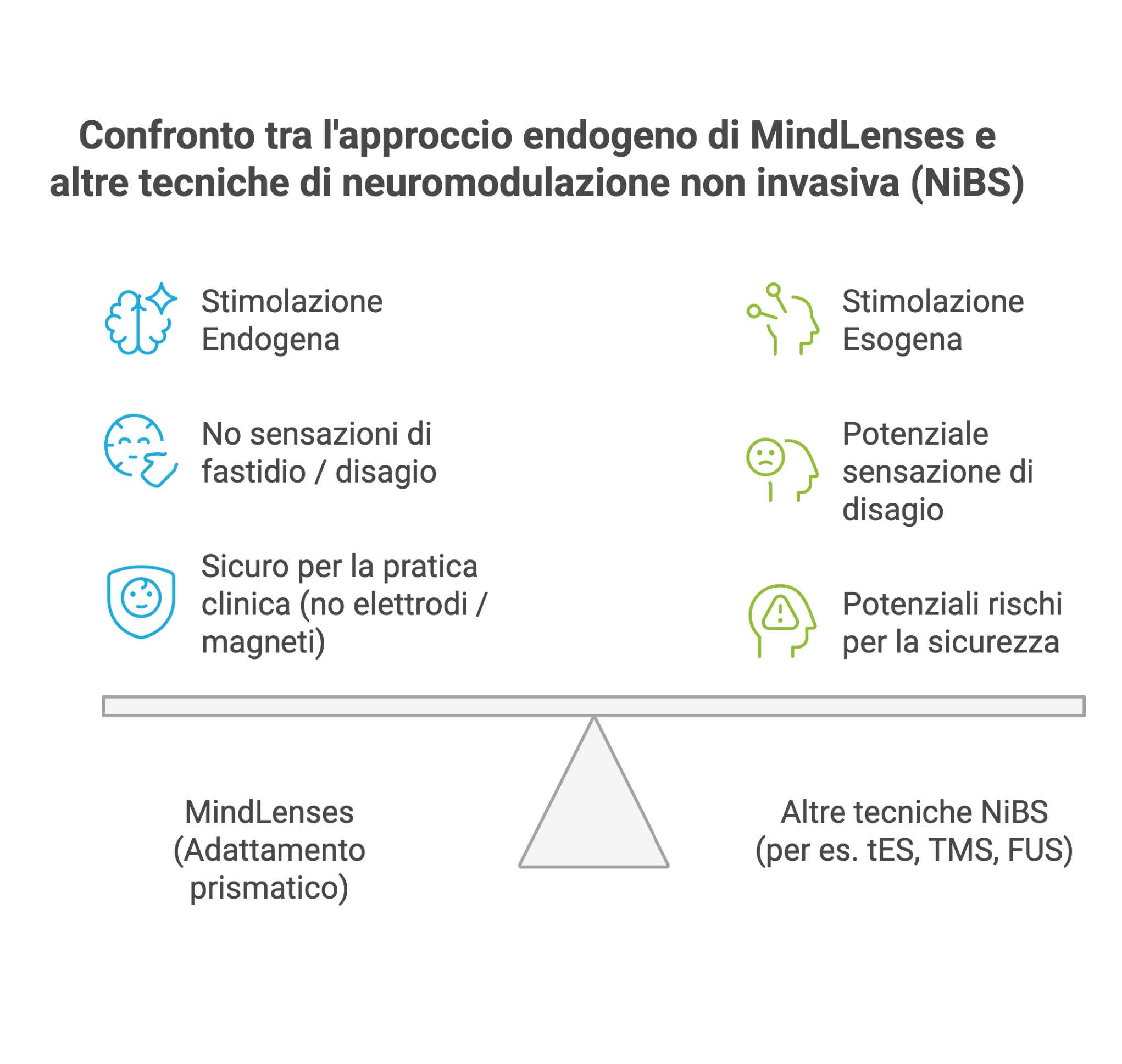
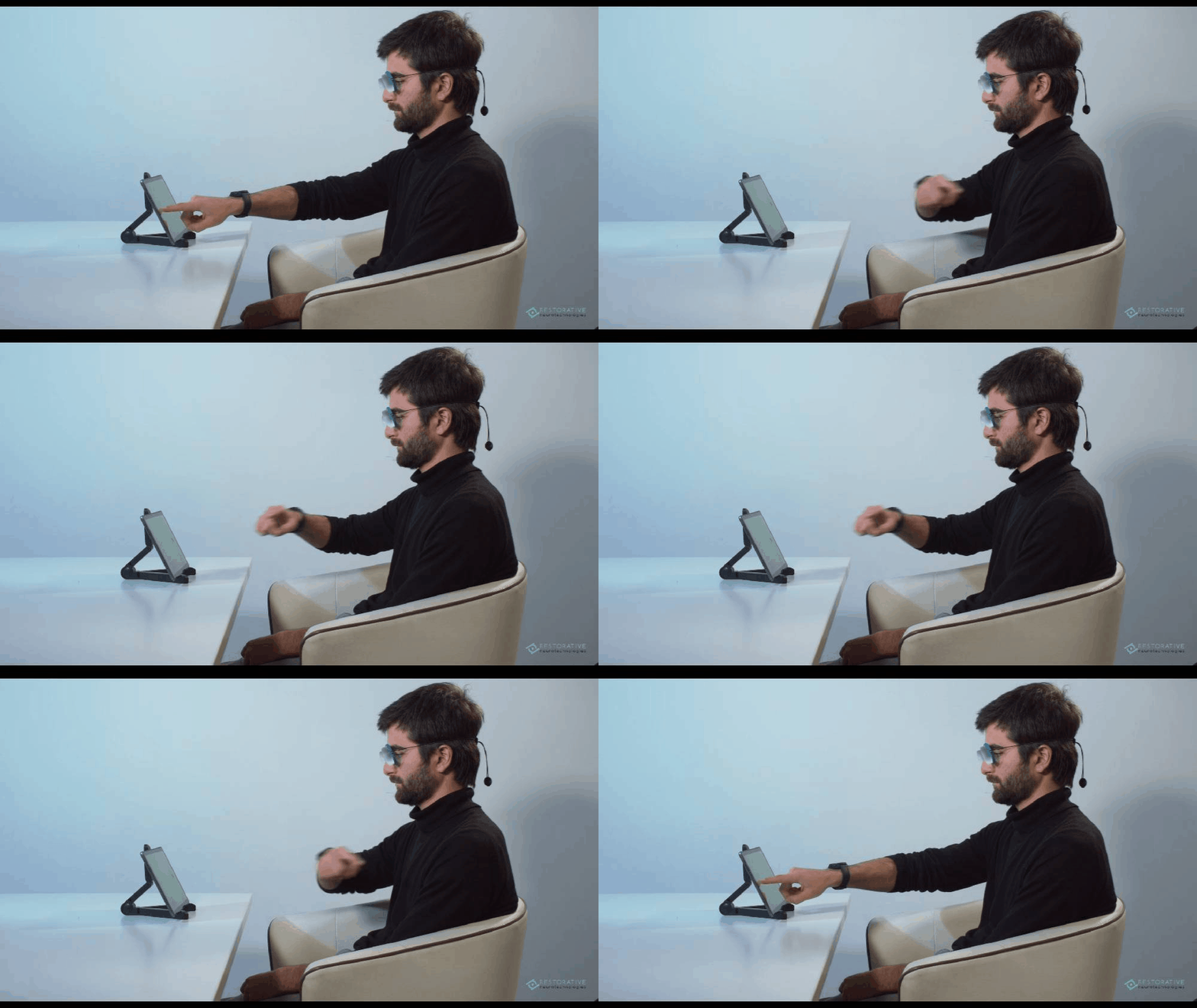
Unlike other neuromodulation techniques, such as magnetic or electrical stimulation, prismatic adaptation does not require coils or electrodes. Its neuroplastic effect is instead achieved through a visuomotor protocol: special prism lenses temporarily shift the patient’s visual field, while the patient simultaneously performs targeted arm movements to readjust to the altered spatial perception.
This process stimulates brain activity in a non-invasive and endogenous way—that is, it originates from the patient’s own actions—activating circuits involved in perception, attention, and motor control. We can say that the role of prismatic adaptation is that of a “cortical primer,” that is, a preliminary activator that “prepares the ground” for the subsequent phases of rehabilitation.
A Breakthrough Non-Invasive Neuromodulation Technique
See how prismatic adaptation activates the brain from within – safely and effectively.
Endogenous Brain Stimulation: How Prismatic Adaptation Stands Apart
Some neuromodulation techniques, which are more invasive than prism adaptation, are already used both in research and, to a lesser extent, in clinical practice. In certain countries (Germany, for instance) neuromodulation is included in official treatment guidelines for acquired brain injuries.
Techniques like transcranial magnetic stimulation (TMS) and transcranial direct current stimulation (tDCS) work by modulating the brain’s electrical activity through magnetic fields (in the case of TMS) or weak electrical currents (in the case of tDCS), using coils or electrodes placed in direct contact with the patient’s scalp.
Scientific studies have shown that prismatic adaptation can produce similar effects to electrical brain stimulation (Bracco et al., 2017), without the need for magnetic coils or electrodes. It stimulates the brain externally and non-invasively, through a controlled alteration of the patient’s visual experience – and this is what we mean by endogenous stimulation.
Stimulate What Counts
Prismatic adaptation works in a hemisphere-specific way, meaning that, depending on the parameters of the protocol, it is possible to stimulate one hemisphere at a time (Magnani et al., 2014).
This is particularly relevant because many cognitive processes are lateralized. For example, language production is primarily managed by the left hemisphere, while the main networks involved in attention regulation are predominantly located in the right hemisphere.
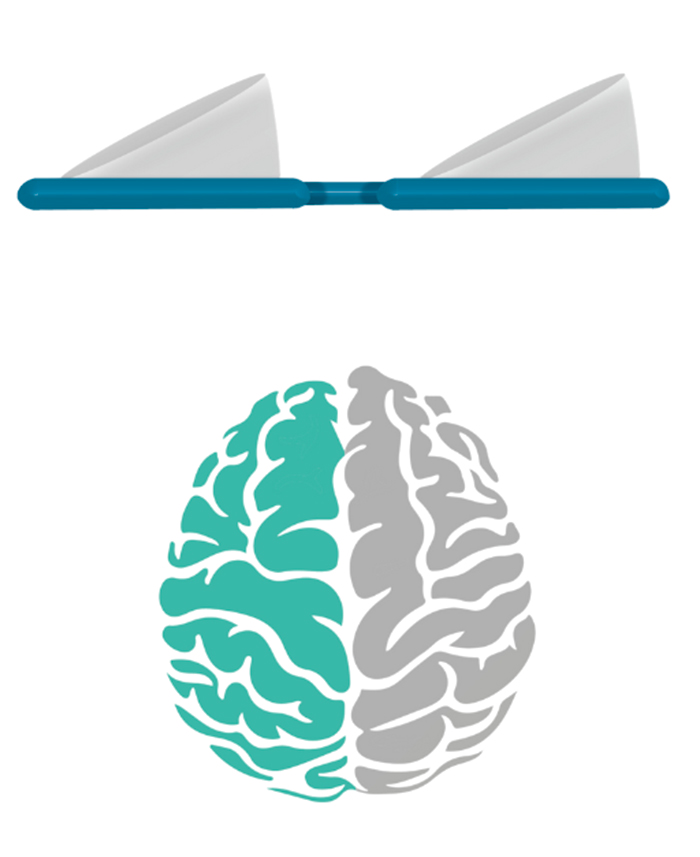
Left hemisphere stimulation: language, sequential processing, problem solving
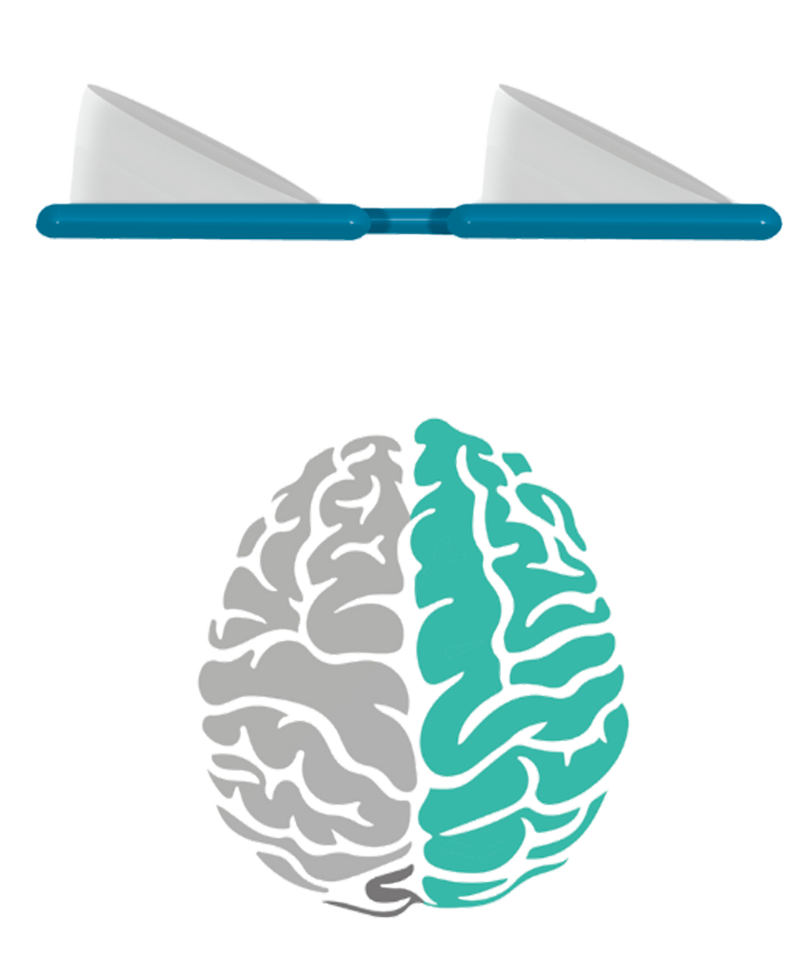
Right hemisphere stimulation: visuospatial skills, pattern and emotion recognition
Prismatic Adaptation in Practice
Prismatic adaptation is a small optical trick, but the brain takes it very seriously!
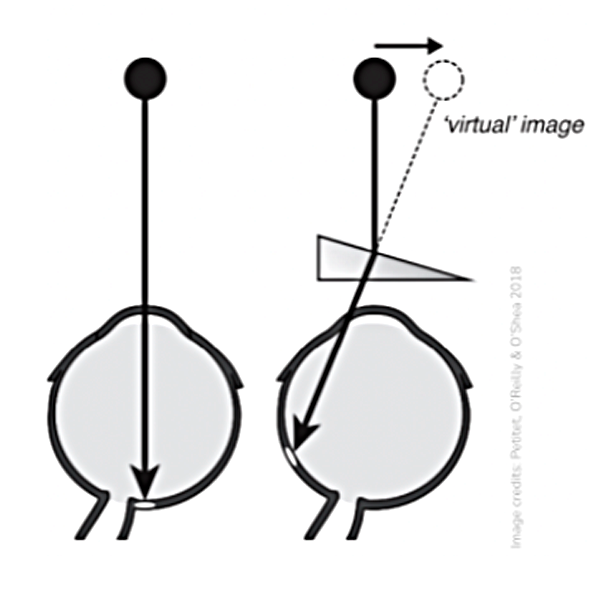
When wearing lenses that slightly shift the visual field, the brain receives “incorrect” information about where objects are located in space. To correct this error, it activates compensation mechanisms involving areas responsible for attention, perception, and motor control.
This activation makes the brain temporarily more plastic – more ready to reorganize and learn -, creating an ideal window of opportunity for cognitive intervention.
Prismatic Adaptation and Serious Games:
Working in Synergy
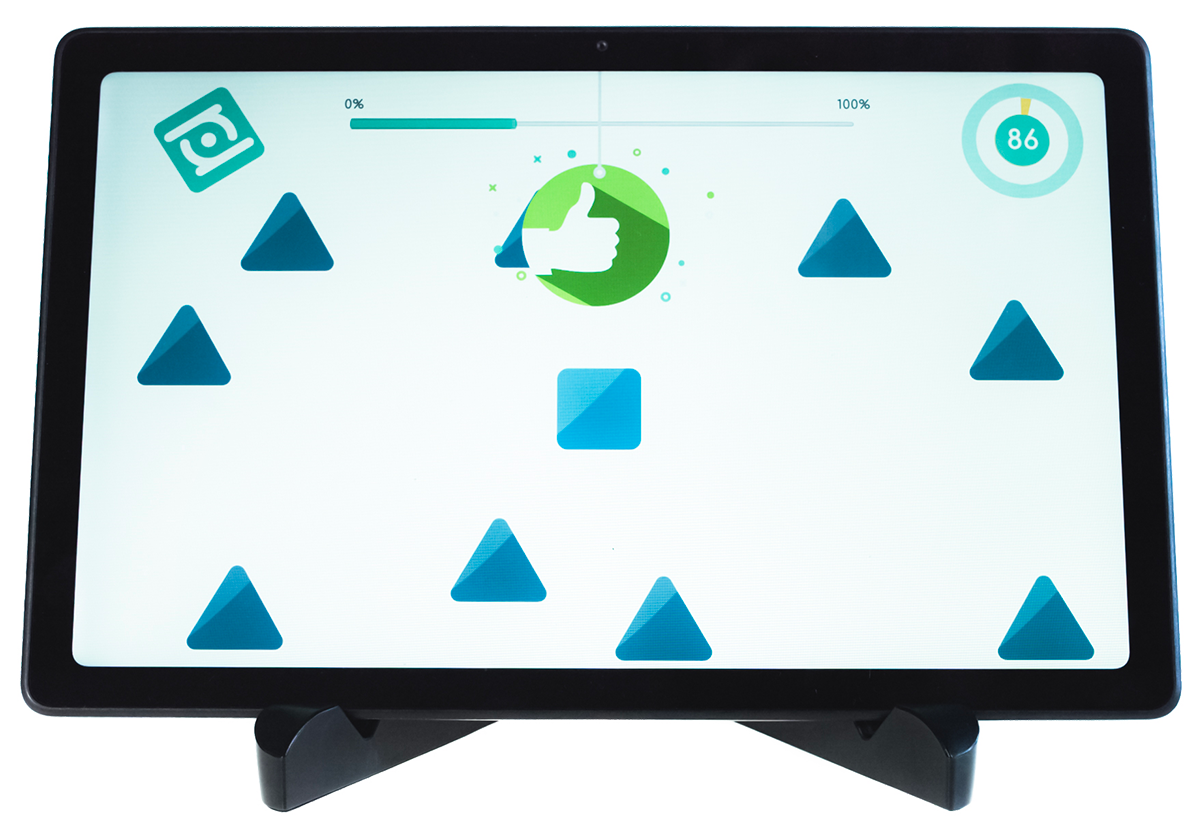
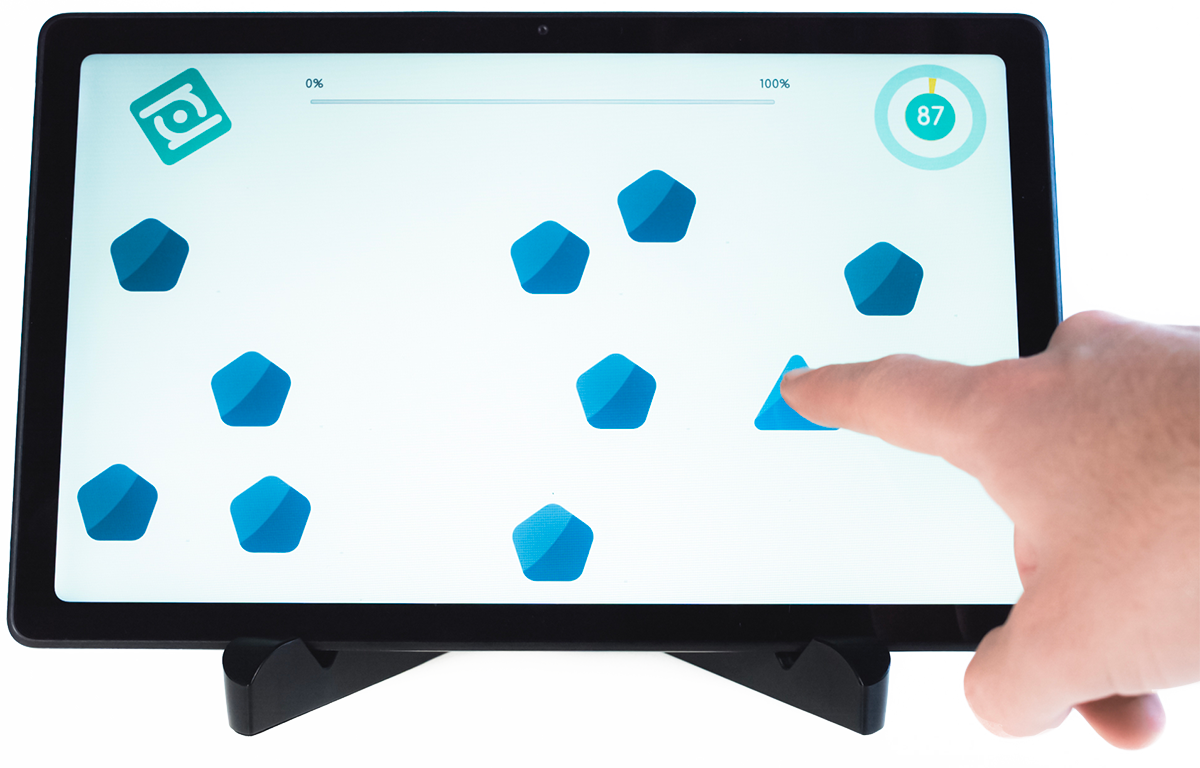
After prismatic adaptation, serious games take over – scientifically designed cognitive exercises to strengthen attention, executive functions, language, and memory.
Patients play a selected number of serious games immediately after completing the non-invasive neuromodulation protocol with prismatic adaptation, in order to exploit the window of heightened cortical plasticity that follows.
Activation first, train second: prismatic adaptation “prepares” the brain circuits, serious games train them in a targeted way to maximize clinical benefits.
Versatile Across Conditions and Cognitive Domains
The cognitive domains targeted by MindLenses games are transversal to many neurological and neurodevelopmental conditions. This allows clinicians to deploy a single, flexible tool across a variety of indications. MindLenses’ serious games are grouped into 3 core domains:
Attention
Executive Functions
Language
Accessible By Design
Our serious games are built with an inclusive, neurodiversity-aware design, ensuring accessibility even for patients with mild-to-moderate cognitive impairment or visual-spatial/language difficulties:
Adaptive and Engaging
Each game is powered by a real-time adaptive algorithm that monitors performance and dynamically adjusts task difficulty.
This maintains the optimal challenge level, sustaining motivation and minimizing therapy dropout.
Contattaci
Contattaci